

Tor ships emergency release 0.4.9.17 as a DDoS floods its relays
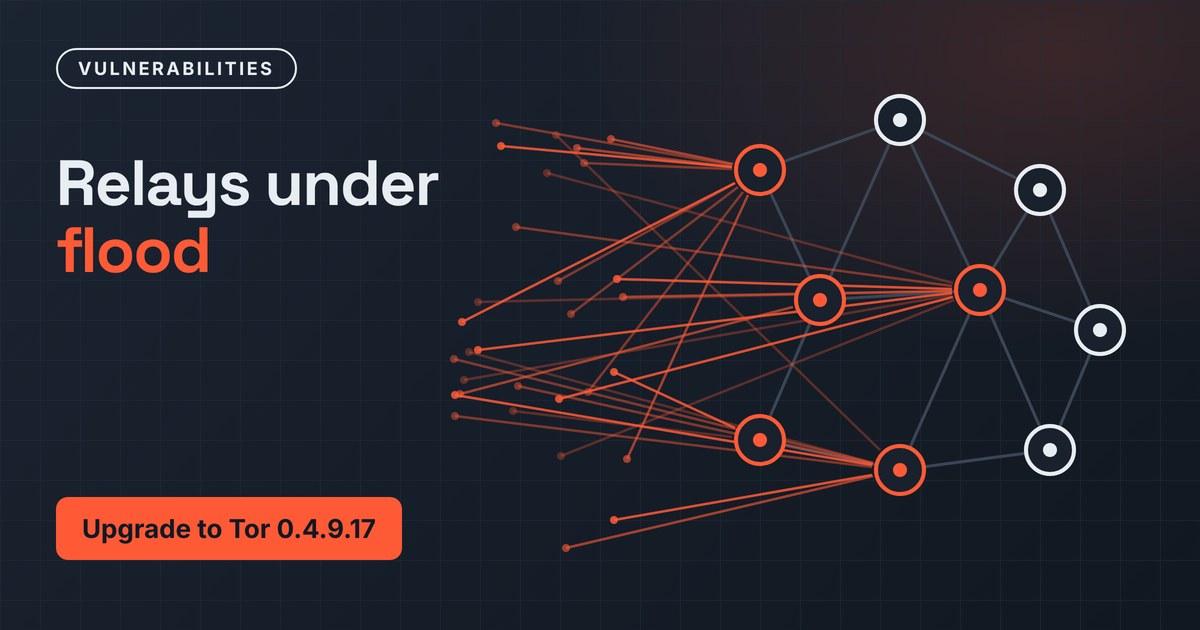

The Tor Project has shipped an emergency update, Tor 0.4.9.17, while its network is under a sustained denial-of-service attack. Developer David Goulet announced the release on 13 November, saying the attack has affected most relay operators, whose servers are being overwhelmed by a massive flood of client circuits. It is the project’s second emergency release this month, and the attack is not over.
What the release changes
According to Tor’s official release notes, the most important fix changes how relays count IPv6 clients for their denial-of-service defences.
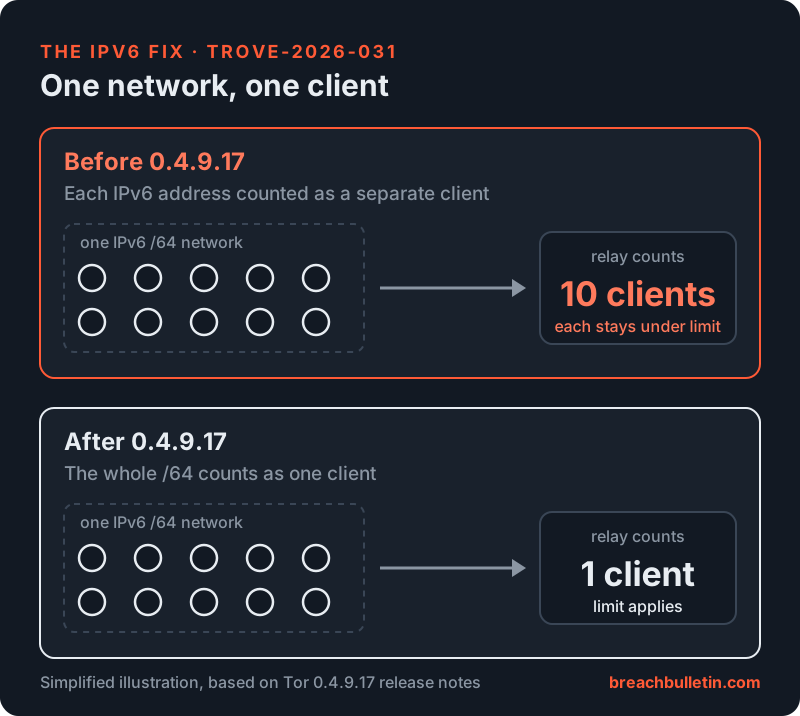
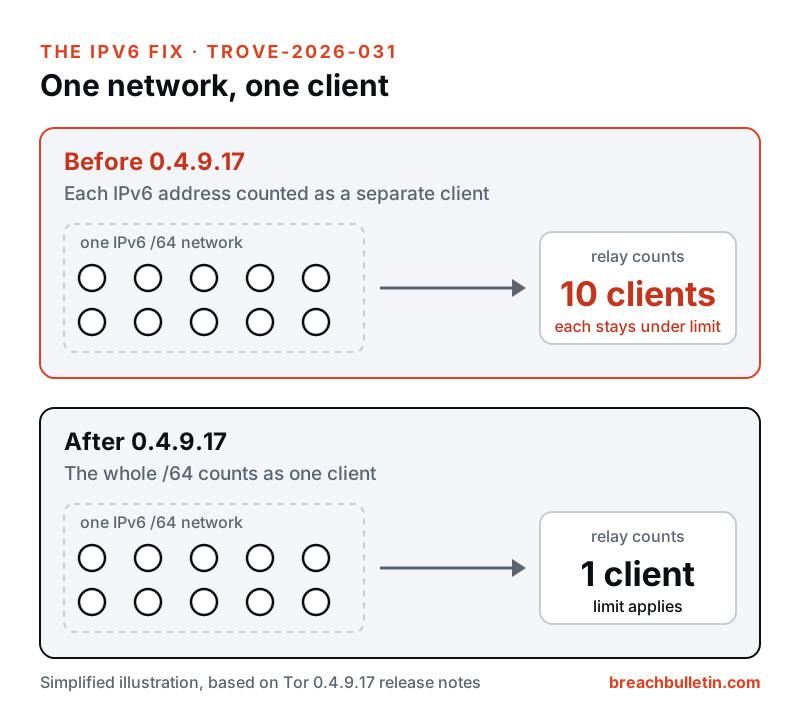
- IPv6 clients are now grouped by network (TROVE-2026-031). Relays used to track each IPv6 address separately. Because a single IPv6 network block (a /64) contains an enormous number of addresses, an attacker could rotate through them so that each one looked like a new client and stayed under the per-client limits. Relays now treat a whole /64 as one client.
- Tor removed the keys for the “bastet” directory authority “due to a potential compromise”, and says it can be reinstated with new keys later. Directory authorities are the small group of trusted servers that agree on the list of relays every Tor client uses.
- The “maatuska” directory authority has new IP addresses, and a separate security fix (TROVE-2026-075) makes Tor reject malformed hostname records in DNS replies.
No extra configuration is needed. Tor says no further action is required after upgrading.
What Tor hasn’t said
Tor has not named an attacker, published traffic volumes or said when the attack began. The release notes describe the bastet problem only as a “potential compromise”, with no further detail. As for when it will end, Tor says it is testing more defences and expects further releases soon.
There is no CVE for these issues. Tor tracks its own security fixes with TROVE identifiers instead.
Who feels it
Journalists, activists, researchers and anyone else who needs to hide their identity or reach blocked sites rely on Tor, as do organisations that publish onion services. Tor’s announcement doesn’t describe the effect on users. The same relays carry everyone’s traffic, though, so expect slower or less reliable connections while the attack goes on.
Keep an eye on the bastet change too. Directory authorities decide which relays the network trusts. Pulling a set of keys before confirming a compromise is a cautious move, and Tor hasn’t said what prompted it.
What to do
- Relay operators: upgrade to 0.4.9.17 now. Check your version with
tor --version, install the update from your usual package source and follow the tor-relays mailing list for further releases. - Onion service operators: update to the latest stable release and watch the Tor Project forum for new defences.
- Tor Browser users: install updates when offered, expect some slowdowns while the attack continues, and only download Tor Browser from the official Tor Project website.
- Most security teams: nothing to do. If your organisation runs relays or onion services, make sure whoever looks after them knows about this release.