

Nvidia says The Gentlemen ransomware claim may involve a partner, not its own systems
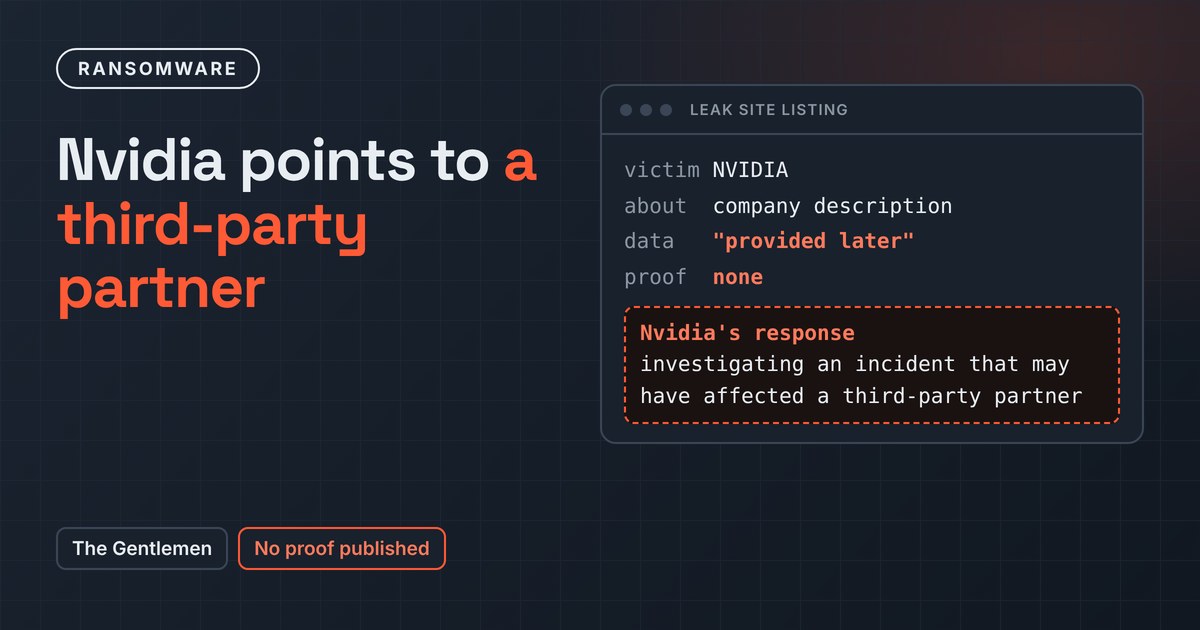
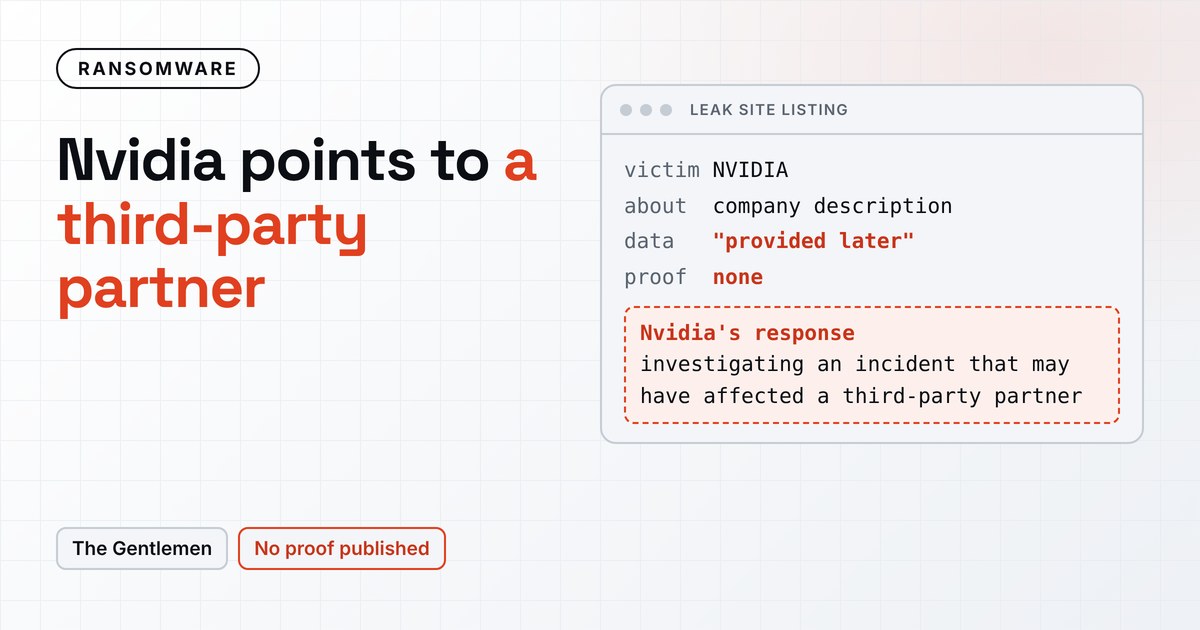
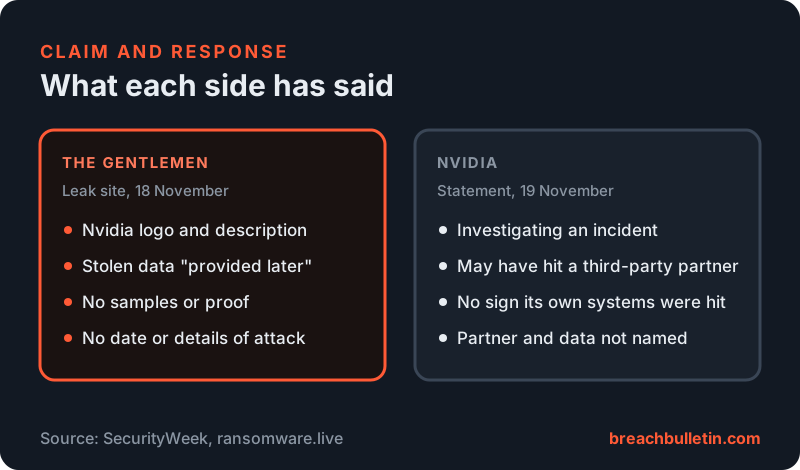
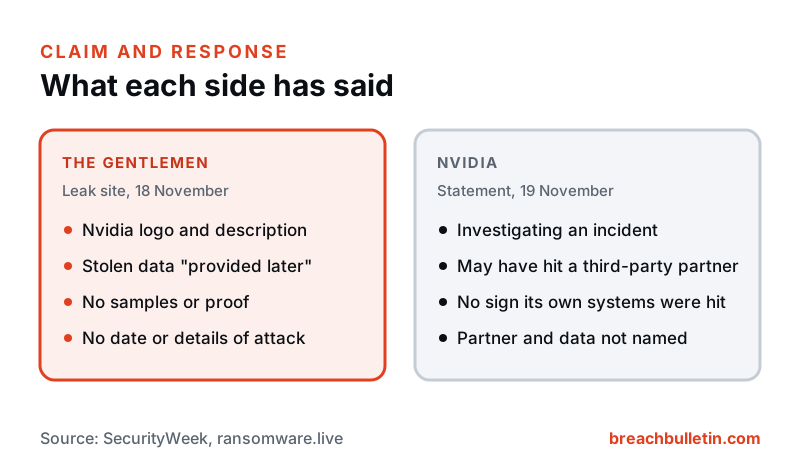
Nvidia says it is looking into a security incident at one of its partners after the ransomware group The Gentlemen added the chipmaker to its leak site. “Nvidia is investigating an incident that may have affected a third-party partner,” a spokesperson told SecurityWeek on 19 November. “We have found no indication that Nvidia systems or networks were affected.”
Nvidia didn’t name the partner or describe what happened. It also didn’t say whether any data about Nvidia, its products or its customers was held by that partner and might have been taken.
What the leak site shows
The listing went up on 18 November, according to the tracker ransomware.live. It has Nvidia’s logo, its revenue and stock symbol, and a general description of the company, with a link to its ZoomInfo business profile. The section about stolen data says only that details will be “provided later”. Cybernews reported that the page also carries a contact address for negotiations and a countdown timer, which had just under 10 days left when it checked.
The group hasn’t posted any sample files or said which part of Nvidia it supposedly breached. Until it does, the listing proves only that The Gentlemen wants Nvidia’s name on its site.
A big name on a supplier’s breach
Ransomware groups gain from attaching a famous brand to an attack. A well-known name gets press coverage, puts pressure on the real victim to pay, and makes the group look more capable to the affiliates it recruits. When the data actually came from a supplier, a contractor or a law firm, the listing often names the bigger company anyway.
Nvidia’s statement fits that pattern, but it leaves the important question open. A partner that builds, tests or sells Nvidia products could still hold Nvidia documents, designs or customer details. That depends on who the partner is, and Nvidia hasn’t said.
Who The Gentlemen are
Microsoft tracks the operators as Storm-2697. In a May report, it said the group appeared around mid-2025 as a closed operation and started renting its ransomware to affiliates in September 2025. Its encryptor can spread through a network on its own, using stolen credentials and up to 21 remote execution methods through PsExec, WMI, scheduled tasks, services and PowerShell.
Sophos, which calls the group GOLD SHERWOOD, investigated several intrusions. In one, attackers logged in to a Fortinet SSL VPN with stolen credentials on an account without multi-factor authentication. Affiliates then relied on ordinary admin tools such as Advanced IP Scanner, PsExec, RDP and Rclone. The median time from first activity to ransomware was about two days, and the quickest was under 24 hours.
The group uses double extortion: it steals data, encrypts systems and threatens to publish the files. Ransomware.live now tracks 1,122 victims on its leak site, up from 683 that Sophos counted at the end of July. Victims span manufacturing, healthcare, education, transport and financial services.
What happens next
If the timer runs out, the group may publish files. If it does, look at what they are and who they belong to before drawing conclusions, since files from a partner can carry Nvidia’s name without coming from Nvidia’s systems.
Nvidia customers and the public don’t need to do anything for now. Companies that work with Nvidia should watch for direct notices from it, and check that their own VPN and remote access accounts use multi-factor authentication, since stolen credentials are how this group usually gets in.
Nvidia was already in the news this week as it reports quarterly results under an interim CEO. For another case of attackers getting in through a company’s supplier, see how a forgotten vendor key exposed Barracuda’s cloud.