Anthropic's IPO wealth may take a while to reach nonprofits, says Fast Forward co-founder
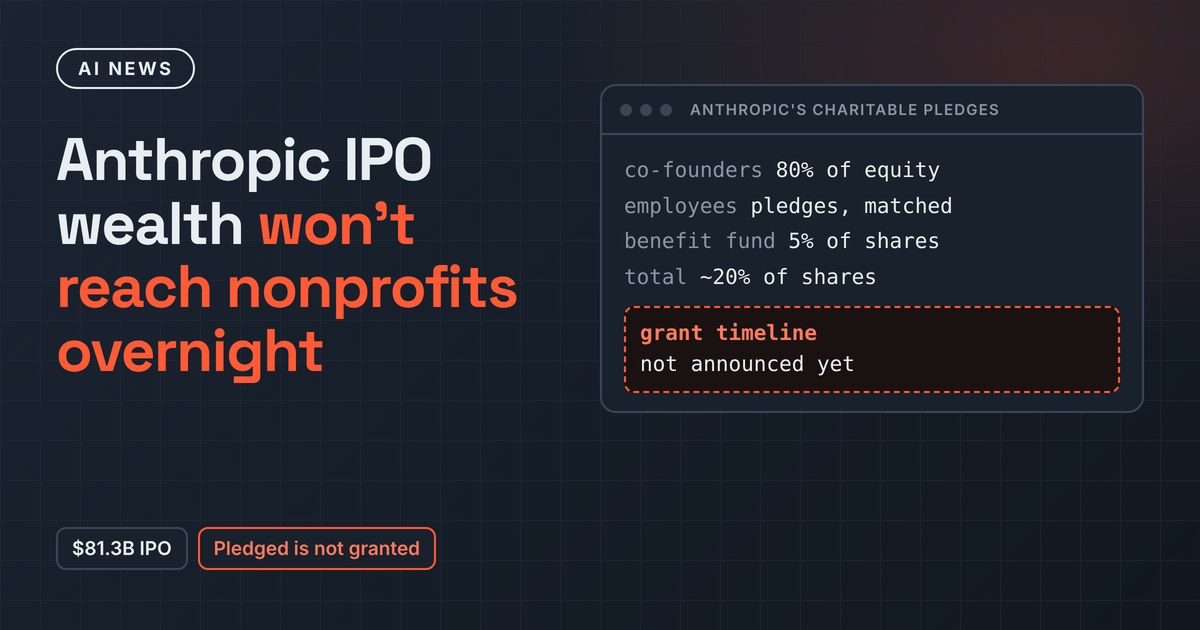
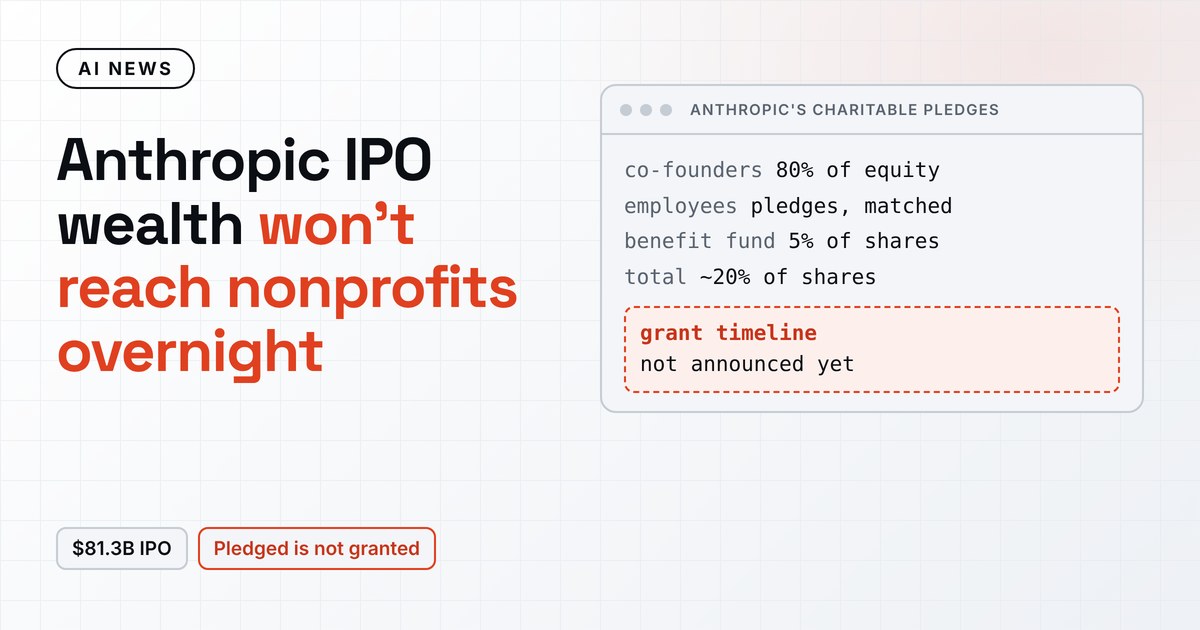
Anthropic’s stock market debut has made a lot of people rich on paper, and a large share of that wealth is promised to charity. Nonprofits shouldn’t expect it to arrive all at once, according to Shannon Farley, co-founder of the tech nonprofit accelerator Fast Forward.
Farley spoke to Devex for an interview published on 23 November. Devex says she “explains why grants may take time to reach nonprofits and makes the case for helping tech nonprofits scale”. The full interview is for Devex Pro subscribers, so we haven’t been able to read the rest of her remarks.
Fast Forward, which Farley started with Kevin Barenblat in 2014, runs an accelerator for nonprofits that build technology, so it has an obvious interest in where new AI money goes.
How much is promised
Anthropic priced its IPO at $83 a share on 18 November, selling 980 million shares, and began trading on Nasdaq the next day under the ticker ANT. That raised about $81.3 billion, the largest IPO on record by money raised. We covered the run-up in AI stocks’ worst week since March 2020.
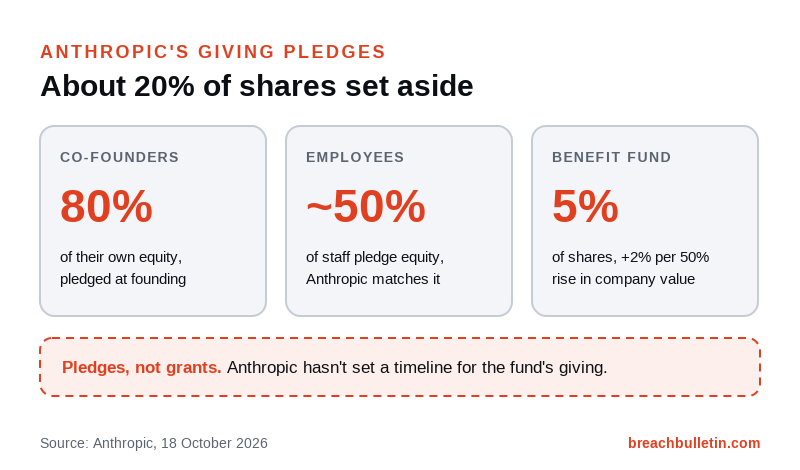
Anthropic has made three kinds of charitable commitment, set out in its October announcement:
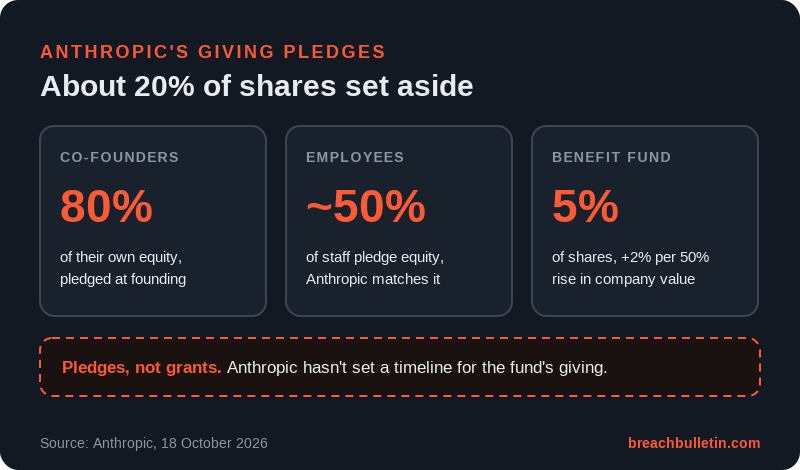
- Its seven co-founders pledged, when the company was founded, to donate 80% of their equity.
- Employees can pledge some of their equity to charity, and Anthropic matches it. About half of employees take part.
- A new Anthropic Public Benefit Fund, an LLC the company owns, received 5% of Anthropic’s shares. The board can add another 2% for every 50% rise in the company’s value above a set baseline.
Anthropic says that adds up to roughly 20% of its shares set aside for the public good.
Why the money will be slow
A pledge isn’t a grant. Anthropic says the fund could make large donations to traditional nonprofits or “direct distributions to specific populations”, and that it chose an LLC to keep its options open. It hasn’t said when the fund will start giving, and it plans to share more about the fund’s structure and governance in the coming months.
Employee and founder pledges depend on people following through, and on when they choose to give. TechCrunch estimated that the fund, employee pledges and Anthropic’s matches could be worth up to $156 billion at a share price of about $95. It also noted that if donors put shares into donor-advised funds first, the money would likely reach charities more slowly.
What it means for nonprofits
Anthropic employees who can now sell or donate their shares are a new group of potential donors. If Farley is right, nonprofits hoping for some of that money should plan for it to arrive gradually rather than as a sudden flood.
None of this calls for action from security teams. It’s a sign of how much of the AI boom’s wealth is now tied to a handful of companies, and of how long it can take for paper fortunes to become funding.
Sources
- Devex: How could AI wealth help tech nonprofits grow?, 23 November 2026 (subscriber article)
- Anthropic: Investing in the public benefit, 18 October 2026
- Anthropic: Anthropic prices initial public offering, 18 November 2026
- TechCrunch: Anthropic’s IPO could deliver $156B to charity, 19 November 2026