

Weekly summarySo far
The week in security
Saturday 21 to Friday 27 November 2026
This week isn't over. It covers stories up to Tuesday, 24 November, and the full summary is ready on Friday afternoon.
Act on these first
- Chrome 158 fixes a critical flaw that could let a web page escape the sandbox
- Wiz: attackers used AI tools to take over Kubernetes clusters and steal cloud keys
- The nginx2root HTTP/2 flaws reach Palo Alto firewalls and Panorama
- Attackers used a Microsoft Entra Connect Health flaw to read tenant details and admin emails
- F5 ships hotfixes for six critical BIG-IP flaws that crash traffic without a login
Added to CISA KEV
Full KEV catalogueVulnerabilities 6
Chrome 158 fixes a critical flaw that could let a web page escape the sandbox
Google has fixed CVE-2026-134401, a critical bug in Chrome's Variations component that its own CVE record says could run code outside the sandbox from a crafted web page. It isn't known to be exploited. Update to 158.0.8127.88, and check last week's exploited zero-day is fixed too.
- VulnerabilitiesPatch available
Public exploit turns a standard Windows user into SYSTEM through Remote Access
Core Security has published a working proof of concept for CVE-2026-119853, a Windows Remote Access flaw Microsoft fixed on 10 November. A standard user can get a SYSTEM console with no VPN or internet connection. Check the November update is on every machine.
The nginx2root HTTP/2 flaws reach Palo Alto firewalls and Panorama
Palo Alto Networks says the two NGINX HTTP/2 flaws disclosed last week affect PAN-OS 12.2, 12.1 and 11.2 and Panorama, but only where HTTP/2 has been turned on. It's off by default. Fixed hotfixes are out or due today, and there's a one-line workaround.
- VulnerabilitiesPatch available
Upload2Shell: a Ghostscript flaw turns image previews into command execution on web, mail and print servers
Researchers at pwn.ai showed that a Ghostscript font bug, CVE-2026-125396, lets a disguised file run commands on servers that generate previews, thumbnails or print output, including Roundcube, some WordPress sites and CUPS print queues. Ghostscript fixed it in September, but some distributions are still catching up.
- VulnerabilitiesNo fix yet
The 9.8 OpenSSL Base64 bug that OpenSSL itself rates Low
CVE-2026-121481 is a heap overflow in OpenSSL 4.x's EVP_EncodeBlock() that only triggers with inputs of about 2 GB. Some trackers score it 9.8, but OpenSSL, Red Hat and CISA rate it Low or Medium, and the fix hasn't been released yet.
F5 ships hotfixes for six critical BIG-IP flaws that crash traffic without a login
F5 has released engineering hotfixes for six critical BIG-IP bugs, rated 9.8, that let an unauthenticated attacker crash the Traffic Management Microkernel and possibly run code. Five involve specific iRule commands, and one affects APM. There is no workaround.


Data Breaches 2
Samsung Securities says hackers took 8,241 customers' details from its complaints website
South Korean brokerage Samsung Securities found an intruder in its Voice of Customer complaints service on 21 November. Files that customers had uploaded with complaints leaked, holding names, account numbers, addresses, phone numbers and driver's licence numbers.
- Data BreachesExploited
Attackers used a Microsoft Entra Connect Health flaw to read tenant details and admin emails
Microsoft says attackers exploited a flaw in the Entra Connect Health API to read metadata about customer tenants, including administrator contact emails. The flaw existed from July until a fix on 19 November. Passwords and tokens weren't exposed, but the stolen details are ideal for phishing.
Ransomware 1
BYOD ransomware gang plays spoken ransom demands on hospital and university computers
A new ransomware group called BYOD has claimed at least nine organisations since early October, including UNM's health system, which diverted ambulances, and Vanderbilt University. Its computers announce the attack out loud. Most of its bigger claims are unverified.
Threat Intelligence 1
- Threat IntelligenceExploited
Wiz: attackers used AI tools to take over Kubernetes clusters and steal cloud keys
Wiz Research says attackers running AI attack frameworks such as ARTEX and CyberStrikeAI chained stolen tokens, over-trusted CI jobs and broad service accounts into cluster-admin within days. One intrusion reached two AWS accounts and seven EKS clusters in four days.
AI News 4
Anthropic's IPO wealth may take a while to reach nonprofits, says Fast Forward co-founder
Anthropic's record IPO has nonprofits hoping for a wave of new AI money. In a Devex interview, Fast Forward's Shannon Farley says grants may take time to arrive, and makes the case for helping tech nonprofits scale.
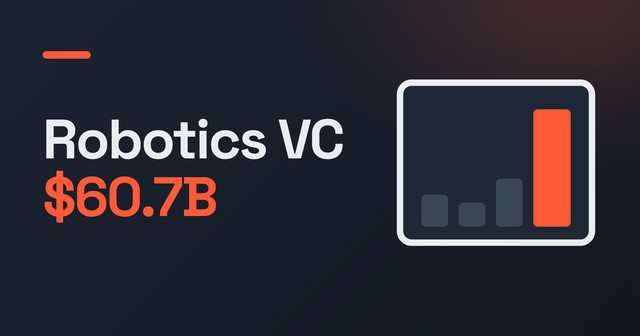
Robotics funding heads for $60.7 billion this year as listed robotics stocks fall
Venture firm F-Prime Capital expects robotics companies in the US, Europe and Israel to raise $60.7 billion in 2026, nearly three times last year. Most of it is going into a few huge rounds, while listed robotics companies have lost 21% on average in a year.
OpenAI says its coding agents now finish 46% of its own two-to-four-hour research tasks
In a report on its internal research, OpenAI says agents completed 46% of tasks that would take a person two to four hours without any human help, up from 23% in March. The numbers come from OpenAI's own tasks, estimated by an AI model, and vary widely by type of work.
AI stocks have their worst week since March 2020, and Anthropic tests its IPO price
A sell-off in AI and chip stocks left the Nasdaq down about 10% for the week to 20 November, its worst week since March 2020. Nvidia fell 14% on Friday, and Anthropic briefly traded five cents above its $83 IPO price.


AI Tools 2
Inkling 2 Mini is Apache 2.0 with a 1M-token context, but read the use policy too
Thinking Machines' new open-weight model, Inkling 2 Mini, is licensed under Apache 2.0 and supports up to 1 million tokens of context, according to its model card. The announcement didn't say so. A separate acceptable use policy also applies to anyone who downloads it.
Gemini can now phone businesses for you. Here's how to opt out if you run one
Google has added Duplex calling to Tasks in the Gemini app, so Gemini can ring restaurants, salons and garages on a user's behalf. It also pays with Google Pay and can read utility bills. Tasks is now free in six countries, but calling and payments start in the US.

Get this summary every Friday in your feed reader: weekly RSS feed. All feeds.